
🌿 Castor Oil & Aloe Vera Hair/ Skin Recipe
Castor Oil & Aloe Vera Hair: Your Complete Natural Guide to Stronger, Fuller Strands
You have probably scrolled through countless hair care routines, watched endless tutorials, and maybe even spent a small fortune on salon treatments that promised the world but delivered very little. If your bathroom shelf is cluttered with half-empty bottles and your hair still feels brittle, thin, or lifeless, you are not alone. The frustration is real, and the beauty industry has built an empire on your hope for a miracle.
But what if the real answer has been sitting quietly in nature all along?
Welcome to the world of castor oil and aloe vera hair care—a pairing so simple, so ancient, and so effective that once you understand how it works, you will wonder why you ever bothered with anything else. This guide is built for you: no fluff, no jargon, just straight talk about what this duo can do for your hair and exactly how to use it.
Why Your Hair Is Crying Out for Castor Oil & Aloe Vera
Let us be honest. Your hair takes a beating every single day. Heat styling, chemical dyes, hard water, pollution, stress, and poor nutrition all strip away moisture and weaken your strands from the inside out. You might notice more hair in your shower drain, split ends creeping up faster than you can trim them, or a scalp that feels tight, itchy, or flaky. These are not just cosmetic annoyances. They are signals that your hair ecosystem is out of balance.
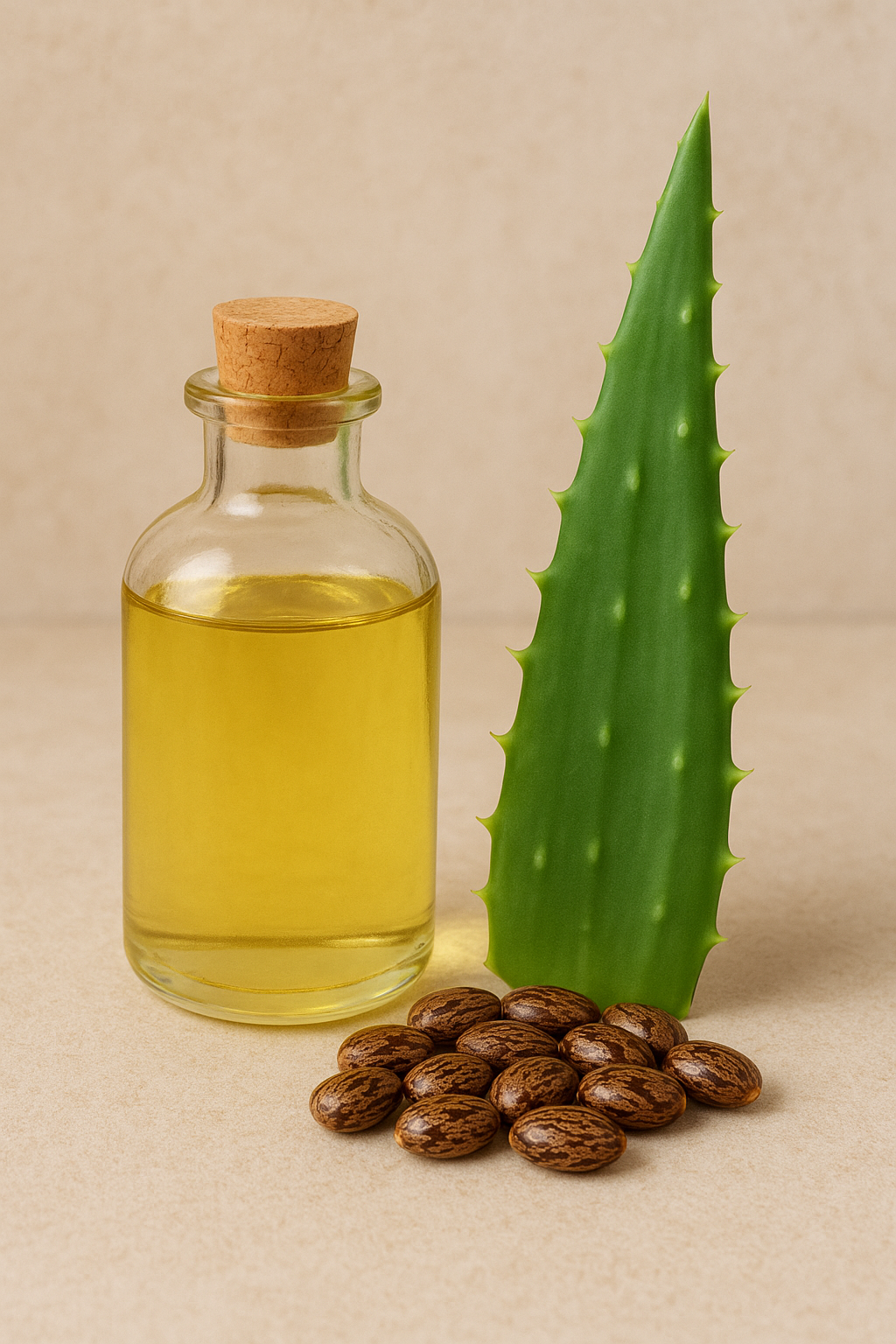
This is where castor oil and aloe vera hair treatments step in. Castor oil, cold-pressed from the seeds of the Ricinus communis plant, is loaded with ricinoleic acid—a rare fatty acid that makes up roughly 90% of its composition. This acid does something remarkable: it boosts blood circulation right where you need it most, at the roots. Better circulation means your follicles receive more oxygen and nutrients, which directly supports healthier, faster growth.
Aloe vera, on the other hand, is not just a pretty houseplant. The gel inside its thick leaves is packed with proteolytic enzymes that repair dead skin cells on your scalp. It also carries vitamins A, C, and E, all of which speed up cell turnover and add that glossy shine you have been chasing. Together, these two ingredients do not just mask problems. They fix them at the source.
The Science That Makes This Duo Work
You do not need a chemistry degree to understand why castor oil and aloe vera hair treatments outperform so many commercial products. Here is the breakdown in plain language.
Castor oil is thick. Really thick. That density is actually an advantage because it creates a protective seal around each strand, locking in moisture and shielding your hair from environmental damage. It also carries natural antimicrobial properties, meaning it fights off the fungi and bacteria that can lead to dandruff and scalp infections. If you have ever dealt with persistent flaking or an irritated scalp, this matters more than you might think.
Aloe vera gel is about 99% water, but that remaining 1% is pure gold for your hair. It contains 20 amino acids that build protein, plus minerals like copper and zinc that strengthen follicles. Its pH level sits between 4.5 and 5.5, which happens to match your scalp’s natural acidity almost perfectly. When your scalp’s pH is balanced, oil production normalizes. You stop swinging between greasy roots and Sahara-dry ends.
When you combine them, something smart happens. The aloe vera thins out the heavy castor oil, making application far easier and less messy. Meanwhile, the castor oil prevents the aloe from evaporating too quickly, so your hair actually absorbs the nutrients instead of watching them disappear down the drain.
What You Can Realistically Expect
Let us set expectations straight. No natural treatment can override your genetics or turn you into a shampoo commercial model overnight. But if you commit to a consistent castor oil and aloe vera hair routine, here is what the timeline typically looks like for most people:
-
Within two weeks: Your scalp feels less itchy. Your hair feels softer after washing. Detangling becomes noticeably easier.
-
By week four: You see less breakage when you comb. Baby hairs may start peeking through along your hairline. Dandruff flakes diminish.
-
Around week eight: Your hair looks thicker because you are retaining more length. The overall texture feels stronger and more elastic.
-
After three months: The cumulative effect kicks in. Your hair grows at its maximum natural rate, looks shinier, and feels genuinely healthy from root to tip.
The key word here is consistent. Sporadic use will give you sporadic results. Treat this like a habit, not a one-time event.
How to Build Your Own Treatment at Home
You do not need a laboratory. You need a bowl, a spoon, and about fifteen minutes. Here is a tried-and-true recipe that works for nearly every hair type:
What you will need:
-
Three tablespoons of cold-pressed castor oil
-
Four tablespoons of pure aloe vera gel (fresh from the plant is ideal, but a high-quality store-bought version works too)
-
One tablespoon of coconut oil for extra slip
-
Five drops of vitamin E oil for antioxidant protection
What to do: Mix everything in a bowl until the texture is smooth and uniform. Section your dry hair into four to six parts. Using your fingertips—not your nails—massage the mixture directly into your scalp for five full minutes. This massage is not optional; it is what drives the blood flow that activates growth. Once your scalp is coated, work the remaining mixture through your lengths, paying extra attention to your ends. Cover with a shower cap, wait thirty to sixty minutes, then rinse with lukewarm water and a gentle, sulfate-free shampoo.
If your hair is extremely damaged or chemically treated, upgrade to an intensive version. Swap regular castor oil for Jamaican black castor oil, add one tablespoon of raw honey, and include one egg yolk for a protein surge. Leave this version on for up to an hour under a warm towel. Rinse with cool water first to prevent the egg from cooking in your hair, then shampoo as usual.
Application Tips That Change Everything
Even the best recipe fails if you apply it wrong. Here are the habits that separate people who get results from people who give up:
-
Warm the oil slightly. A few seconds in the microwave makes castor oil easier to spread and helps it penetrate the hair shaft.
-
Focus on the scalp. Your roots are where growth happens. The lengths benefit too, but the scalp is your priority zone.
-
Use heat. After applying the mask, wrap your head in a warm towel or sit under a hooded dryer for fifteen minutes. Heat opens the hair cuticle and lets the ingredients sink deeper.
-
Do not overdo it. Once or twice a week is plenty. More than that, and you risk buildup that weighs your hair down and clogs follicles.
-
Document your progress. Take a photo of your hairline or length today. Compare it in eight weeks. Visual proof keeps you motivated when patience runs thin.
Common Mistakes You Should Avoid
You are eager. That is good. But eagerness leads to errors. Here is what not to do:
-
Do not drown your scalp in castor oil. It is incredibly thick, and too much will turn your hair into a greasy mess that takes three shampoos to remove. Start small.
-
Do not buy cheap, processed oils. If the castor oil is not cold-pressed and hexane-free, you are wasting your time. If the aloe vera gel contains alcohol, dyes, or a paragraph of unpronounceable chemicals, skip it.
-
Do not expect miracles in a week. Hair grows roughly half an inch per month. Natural treatments support that process, but they do not rewrite biology.
-
Do not ignore your diet. Topical treatments help, but your hair is built from the inside out. Protein, iron, and hydration matter just as much as what you put on your head.
FAQ: Your Top Questions Answered
Can you leave castor oil and aloe vera in your hair overnight?
Yes, but protect your pillowcase. Castor oil stains fabric, so wrap your hair in a silk scarf or use an old pillowcase you do not care about. For overnight use, increase the aloe vera ratio so the mixture is lighter and less likely to create buildup.
Will this combination work for color-treated hair?
Absolutely. In fact, it is one of the safest treatments for chemically processed hair because it restores moisture without stripping color or causing further damage. It is completely natural and gentle.
Can castor oil and aloe vera cure baldness?
No. If your hair loss is genetic or caused by scarring, topical treatments cannot reverse it. However, if your thinning is due to poor scalp health, breakage, or nutritional gaps, this duo can significantly improve density and retention. For persistent hair loss, see a dermatologist.
How do you know if you are allergic?
Always patch test. Dab a small amount of the mixture on your inner arm and wait twenty-four hours. If you see redness, itching, or swelling, do not use it on your scalp. Sensitivity to aloe vera latex or castor oil is rare but possible.
Your Next Step Starts Right Now
You have the knowledge. You have the recipe. You have the timeline. The only thing missing is action.
Stop scrolling. Stop comparing your hair to influencers with professional lighting and editing teams. Start your own castor oil and aloe vera hair journey today, and in two months, take that progress photo. You might be shocked by how far your hair has come.
If this guide helped you, share it with someone else who is tired of empty promises. Drop a comment below with your experience, your questions, or your favorite twist on the recipe. Your hair deserves this. And frankly, so do you.