Seniors This Castor Oil Baking Soda Trick Is Blowing Doctors
Seniors This Castor Oil Baking Soda Trick Is Blowing Doctors
When Your Body Starts Talking Back
Picture this: you roll out of bed one morning, plant your feet on the floor, and that familiar stiffness grips your knees like a vice. You’ve been here before. The bottle of pills sits on the nightstand, but you’ve read the warnings. Your stomach can’t handle another round. Your wallet groans at the pharmacy counter. And somewhere deep down, you wonder if there’s another way.
You’re not imagining things. Millions of seniors across the country are hitting the same wall. The healthcare system keeps prescribing, but your body keeps aching. What if the relief you’ve been chasing isn’t locked behind a prescription pad? What if it’s been hiding in plain sight, tucked between your baking supplies and cooking oils?
That’s exactly what’s happening with a humble kitchen combination that’s sending shockwaves through medical circles. Castor oil and baking soda—two items you probably walked past a hundred times—are becoming the talk of senior wellness communities. And no, this isn’t another internet fad that fizzles out in a week. Real people are reporting real changes. Even some doctors are leaning in, curious about what their patients are discovering on their own.
What Makes This Pairing So Special?
Let’s strip away the hype and look at what’s actually going on here. Castor oil isn’t some new discovery. Ancient Egyptians used it. Traditional healers in India swore by it. Your grandmother probably had a bottle stashed somewhere. But here’s what most people miss: this thick, golden liquid contains something called ricinoleic acid. That’s the secret weapon. It’s a fatty acid you won’t find in your olive oil or coconut oil, and it carries serious anti-inflammatory firepower.
When ricinoleic acid meets your skin, it doesn’t just sit there. It sinks deep, penetrating layers that most topical creams never reach. It goes after the inflammation at the root of your joint pain, your swollen tissues, your nagging discomfort. Think of it as a heat-seeking missile for sore spots.
Now toss baking soda into the mix. That little yellow box in your fridge does more than absorb odors. Medically, it’s sodium bicarbonate—a compound with genuine therapeutic credentials. Research from the Journal of Immunology back in 2018 showed that baking soda can actually calm inflammatory responses in your body. It helps shift your internal environment away from acidity, which tends to amplify pain and stiffness.
Put them together? You’ve got a one-two punch that addresses pain from the surface and, potentially, from within.
Why Seniors Are Walking Away from the Pharmacy Counter
Let’s be brutally honest about something. The current system isn’t working for a lot of older adults. You walk into a doctor’s office with aching joints, and you walk out with a paper slip and a list of side effects longer than your grocery list. NSAIDs tear up your stomach. Opioids terrify anyone who’s watched the news. Topical gels give you twenty minutes of relief before the burning returns.
The numbers paint a stark picture. According to the National Center for Complementary and Integrative Health, adults over sixty-five represent the fastest-growing demographic turning toward natural remedies. They’re not rejecting medicine. They’re rejecting a system that treats symptoms without solving problems, that hands out bills instead of answers.
What draws seniors to the castor oil baking soda approach isn’t just effectiveness—though that’s a big part. It’s control. You mix it yourself. You apply it yourself. You decide when and how often. For a generation that’s watched healthcare costs spiral while quality stagnates, that autonomy matters. It matters a lot.
What This Remedy Can Actually Do for You
Joint pain relief sits at the top of most seniors’ wish lists, and this is where the castor oil baking soda combination shines brightest. The ricinoleic acid goes to work on inflamed joint tissues, while the baking soda helps neutralize the acidic environment that keeps those joints angry. Regular application—two or three times weekly—often shows results within a month. Morning stiffness loosens. That wince when you stand up softens.
But the benefits stretch further than your knees and hips. Poor circulation plagues countless seniors, leaving extremities cold, swollen, and slow to heal. Castor oil packs stimulate lymphatic drainage and blood flow in ways that warming creams simply don’t. Your fingers feel warmer. Ankle swelling subsides. Minor cuts and scrapes close faster because your blood is actually reaching where it needs to go.
Your skin gets a boost too. Aging thins your skin, dries it out, leaves it vulnerable. Castor oil penetrates deeply to moisturize and repair. Baking soda gently exfoliates and balances pH. Together they address the cracking, the flaking, the irritation that no ordinary lotion seems to touch.
Some seniors even explore internal use—though this demands far more caution and always requires your doctor’s green light. Small amounts of food-grade castor oil with baking soda water have traditional roots in digestive support and gentle detoxification. But let’s be crystal clear: this isn’t the place to experiment blindly.
How to Put This Together at Home
You don’t need a chemistry degree. You don’t need special equipment. Here’s the straightforward approach that’s working for thousands of seniors right now.
For joint pain and muscle soreness, whip up this simple paste:
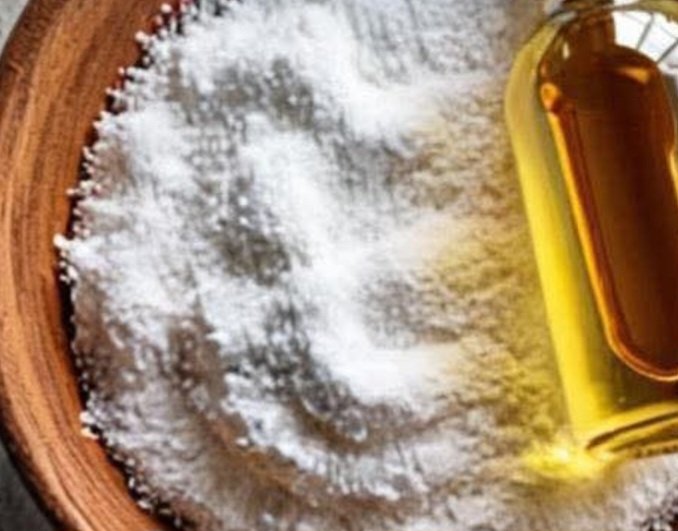
Grab two tablespoons of cold-pressed, hexane-free castor oil. Add one tablespoon of pure baking soda. Stir in warm water drop by drop until you get a thick, spreadable consistency. Slather it directly onto whatever’s hurting—knee, shoulder, lower back. Cover with a clean cloth or plastic wrap to protect your clothes. Settle in for thirty to sixty minutes, then rinse with warm water. Do this two or three times weekly.
For deeper tissue work, upgrade to a castor oil pack:
Soak a piece of flannel cloth in a mixture of three to four tablespoons castor oil and one teaspoon baking soda. Lay the cloth over your trouble spot. Cover with plastic wrap. Place a hot water bottle or heating pad on top. The heat drives absorption deeper than the paste alone. Rest quietly for forty-five minutes to an hour. Store that same cloth in a sealed container in your fridge—you can reuse it several times.
Internal use—proceed with extreme care:
Only food-grade castor oil, only pure baking soda. Mix half a teaspoon of baking soda into a full glass of warm water. Take on an empty stomach. Limit to once or twice weekly maximum. And absolutely, under no circumstances, skip talking to your doctor first. Kidney issues, blood pressure medications, sodium restrictions—any of these can turn a helpful remedy into a dangerous mistake.
The Smart Way to Stay Safe
This combination is gentle, but “gentle” doesn’t mean “risk-free.” Your skin might react. Your medications might clash. Your underlying conditions might protest.
If you have kidney disease or your doctor has you on a sodium-restricted diet, skip the internal baking soda entirely. If your skin tends toward sensitivity, test a small patch on your inner arm before slathering your whole back. If you’re on blood thinners or have any bleeding disorder, get medical clearance before starting. And never, ever apply this to broken skin or open wounds.
Start conservatively. Shorter application times at first. Watch how your body responds. Keep a simple journal—what you used, where you put it, how you felt afterward. Patterns emerge quickly, and that information becomes gold when you talk with your healthcare provider.
Why the Medical World Is Finally Paying Attention
For years, natural remedies lived in the shadows of mainstream medicine. But something is shifting. Functional medicine practitioners—doctors who blend conventional training with holistic approaches—are increasingly recommending castor oil packs to their patients. Peer-reviewed research on sodium bicarbonate’s anti-inflammatory properties keeps expanding. The low cost and minimal risk profile make it an easy sell for integrative care models.
What’s catching doctors off-guard isn’t the science alone. It’s the stories their patients bring them. The seventy-two-year-old who dumped her knee brace after three weeks. The sixty-eight-year-old who canceled his injection appointment because the pain simply wasn’t there anymore. When results speak this loudly, even skeptical physicians start listening.
Your Next Move
You’ve read this far for a reason. Something in your body is asking for help, and the usual answers haven’t satisfied you. The castor oil baking soda trick isn’t magic. It won’t cure everything. But it represents something powerful: the possibility that relief doesn’t have to come with a pharmacy receipt attached.
Pick up a bottle of cold-pressed, organic castor oil. Grab some pure, aluminum-free baking soda. Mix your first paste this week. Test it on one aching joint. Pay attention to how you feel. Document your experience.
And here’s what I’d love from you: come back and share your story. Did the stiffness ease? Did your doctor raise an eyebrow at your progress? Your voice matters in this conversation. Drop a comment below, subscribe to our newsletter for more senior-focused natural health breakthroughs, and let’s build a community where real solutions get the spotlight they deserve.
Your body has been waiting. Maybe it’s time you gave it something worth waiting for.