
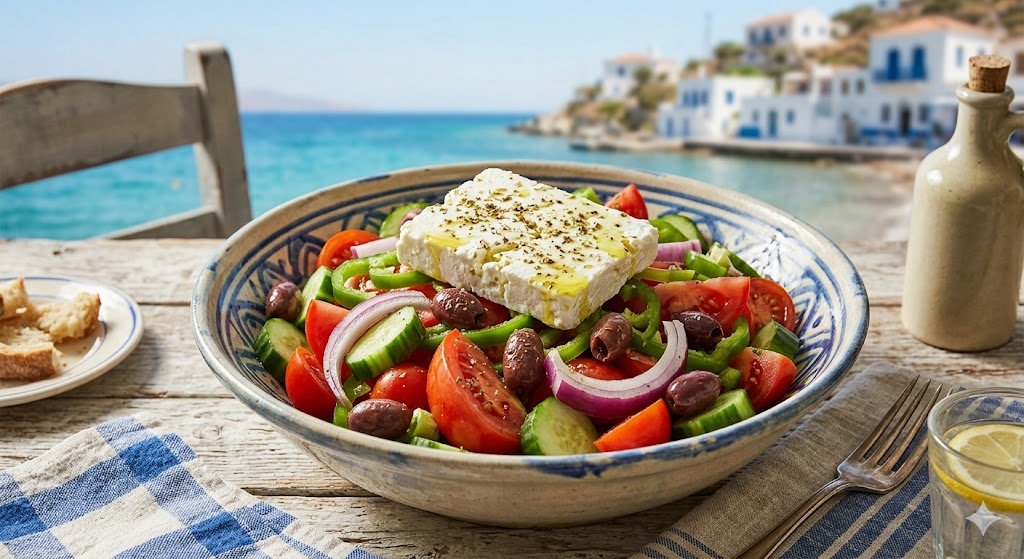
classic greek salad
Classic Greek Salad: The Ultimate Guide to Making the Perfect Mediterranean Dish at Home
Imagine sitting on a sun-drenched terrace in Santorini, the Aegean Sea sparkling in the distance. A waiter places a simple white bowl in front of you—chunks of ripe tomato, crisp cucumber, creamy feta, and glistening Kalamata olives, all dressed in golden olive oil. That first bite? Pure Mediterranean magic. Now, what if I told you that this life-changing experience is just 15 minutes away in your own kitchen?
What Is Classic Greek Salad? Understanding the Heart of Mediterranean Cuisine
The Origins and Cultural Significance of Classic Greek Salad
The story of classic Greek salad stretches back centuries to the rural villages of Greece, where farmers would gather whatever grew in their gardens and toss it together with a slab of local cheese and a generous pour of olive oil. Known locally as horiatiki salata—literally “village salad”—this dish wasn’t born in a fancy restaurant. It came from the earth, from necessity, and from the Greek philosophy that the best food requires the fewest ingredients.
In 2013, UNESCO recognized the Mediterranean diet as an Intangible Cultural Heritage of Humanity. Classic Greek salad sits at the very center of that tradition. It isn’t just a side dish you order to feel healthy. It’s a way of eating that has sustained entire populations for generations, and once you understand its roots, you’ll never look at a bowl of chopped vegetables the same way again.
What Makes a Classic Greek Salad Truly Authentic?
Here’s where most people get it wrong. Walk into an American diner and order a “Greek salad,” and you’ll likely get a bed of iceberg lettuce topped with a few sad tomato wedges and some crumbled feta. That isn’t classic Greek salad. That isn’t even close.
An authentic classic Greek salad contains no lettuce whatsoever. None. Zero. The foundation is built on chunky, sun-ripened vegetables that can stand up to bold flavors. The feta arrives as a thick slab resting proudly on top—not crumbled into oblivion. And the dressing? Just extra virgin olive oil, maybe a splash of red wine vinegar, and a heavy hand of dried oregano. That’s it. No creamy dressings, no balsamic glaze, no fancy vinaigrettes.
Classic Greek Salad Ingredients: Your Complete Shopping Guide
The Essential Components Breakdown
Your shopping list for classic Greek salad is refreshingly short, but every single item matters. Quality isn’t optional here—it’s everything.
Table
| Ingredient | Quantity | Why It Matters | Shopping Tips |
|---|---|---|---|
| Ripe Tomatoes | 4 large | The juicy base; provides acidity and sweetness | Choose vine-ripened, deeply red, slightly soft to the touch |
| Cucumbers | 2 medium | Adds crunch and freshness | Persian or English cucumbers work best—fewer seeds, thinner skin |
| Red Onion | 1 medium | Sharp, pungent flavor balance | Soak slices in cold water for 10 minutes to mellow the bite |
| Green Bell Pepper | 1 large | Signature crisp texture and slight bitterness | Look for firm, glossy skin without wrinkles |
| Kalamata Olives | 1 cup (150g) | Briny, rich depth of flavor | Whole pitted olives; never sliced black olives from a can |
| Feta Cheese | 200g block | Creamy, salty centerpiece | Authentic Greek PDO feta made from sheep’s milk |
| Extra Virgin Olive Oil | ⅓ cup (80ml) | The soul of the entire dish | Cold-pressed, Greek origin preferred; Koroneiki varietal is ideal |
| Dried Oregano | 1-2 teaspoons | The defining herb | Greek oregano (rigani), crushed between your palms |
| Red Wine Vinegar | 1-2 tablespoons | Bright acidity (optional but traditional) | Use sparingly; should enhance, not overpower |
Ingredients to Avoid in Authentic Classic Greek Salad
-
Lettuce or leafy greens — This immediately turns your dish into a generic “Mediterranean salad”
-
Balsamic vinegar or lemon juice substitutes — These alter the flavor profile completely
-
Crumbled feta — Authentic serving is always a thick slab placed on top
-
Black olives from a can — Use only Kalamata or other Greek olive varieties
-
Fresh herbs other than dried oregano — No basil, no parsley, no mint in the classic version
Step-by-Step Classic Greek Salad Recipe: Restaurant-Quality Results Every Time
Preparation Method
Follow these steps precisely, and you’ll create a classic Greek salad that would make a Greek grandmother nod in approval.
-
Prep your vegetables. Wash everything thoroughly. Cut your tomatoes into large wedges or thick chunks—never dice them finely. You want rustic, hearty pieces that hold their shape.
-
Handle the cucumber. Peel it partially in a striped pattern, or leave the skin on if you’re using English cucumbers. Cut into thick half-moons.
-
Tame the onion. Slice your red onion into thin rings. Here’s a pro tip that changes everything: soak those rings in ice water for 10 minutes. This removes the harsh bite while keeping the crunch and flavor.
-
Prep the pepper. Remove the seeds from your green bell pepper and slice it into rings.
-
Assemble the base. In a large, shallow bowl, combine your tomatoes, cucumbers, onion rings, and pepper rings.
-
Add the olives. Scatter whole Kalamata olives throughout. Leave the pits in for maximum authenticity, or remove them if you’re serving guests who prefer convenience.
-
Crown it with feta. Place the entire block of feta cheese directly on top of the vegetables. Do not crumble it. This is non-negotiable.
-
Season generously. Sprinkle dried Greek oregano all over everything. Crush the leaves between your palms first to wake up the essential oils.
-
Dress simply. Drizzle your extra virgin olive oil over the top. Add a splash of red wine vinegar if you like, but taste as you go.
-
Let it rest. This is the hardest part. Wait 5 to 10 minutes before serving. This resting period allows the flavors to marry and the vegetables to absorb some of that precious oil.
Classic Greek Salad Nutrition Facts
Table
| Nutrient | Per Serving (¼ of recipe) | % Daily Value |
|---|---|---|
| Calories | 280 kcal | 14% |
| Total Fat | 24g | 37% |
| Saturated Fat | 8g | 40% |
| Protein | 7g | 14% |
| Carbohydrates | 12g | 4% |
| Fiber | 3g | 12% |
| Sodium | 680mg | 30% |
| Vitamin C | 45mg | 50% |
| Vitamin A | 1200 IU | 24% |
| Calcium | 200mg | 20% |
Source: USDA FoodData Central, adjusted for standard recipe proportions
Pro Tips for the Best Classic Greek Salad: Chef Secrets Revealed
Ingredient Quality Makes or Breaks Your Dish
-
Tomato seasonality matters. Use only summer-ripe tomatoes. In winter, high-quality canned San Marzano tomatoes—drained well—actually outperform bland fresh ones.
-
Olive oil grades count. Look for “extra virgin” with acidity below 0.8%. Greek Koroneiki olive oil delivers a peppery, robust flavor that stands up to the strong tastes in this salad.
-
Feta authenticity is key. Check for the PDO (Protected Designation of Origin) label. Authentic Greek feta uses a minimum of 70% sheep’s milk. Cow’s milk “feta-style” cheese lacks the tangy complexity you need.
-
Oregano freshness tricks. Always crush dried oregano between your palms before sprinkling. This releases essential oils that have been locked away since drying.
Common Mistakes That Ruin Classic Greek Salad
-
Cutting vegetables too small — Classic Greek salad features chunky, rustic cuts that you eat with a fork and knife
-
Adding lettuce — This is the number one sign of an inauthentic version
-
Skipping the resting period — Flavors need time to meld; give it at least 5 minutes
-
Using pre-crumbled feta — You lose both texture and the iconic presentation
-
Over-dressing with vinegar — It should enhance, not overpower the olive oil
-
Refrigerating before serving — Room temperature vegetables taste far better; chill only the ingredients beforehand
Classic Greek Salad Variations: Respectful Twists on a Timeless Recipe
Regional Variations Across Greece
-
Cretan style adds barley rusks (paximadia) soaked in water or tomato juice
-
Macedonian style sometimes includes pickled peppers or caper berries
-
Island variations in the Cyclades often add fresh capers
-
Athens restaurant style frequently serves the salad with crusty bread for soaking up the oil
Dietary Adaptations
Table
| Dietary Need | Modification | Impact on Authenticity |
|---|---|---|
| Vegan | Replace feta with marinated tofu or vegan feta | Moderate—texture similar, flavor differs |
| Low-Sodium | Reduce olives, use low-sodium feta | Minor—still recognizable |
| Keto-Friendly | Already keto-compliant; increase feta and olives | None—naturally low-carb |
| Dairy-Free | Omit feta or use nutritional yeast | Significant—feta is central to the identity |
Pairing Classic Greek Salad: Complete Your Mediterranean Meal
Perfect Protein Pairings
-
Grilled lamb chops or chicken souvlaki
-
Pan-seared sea bass or grilled octopus
-
Chickpea patties for a satisfying vegetarian option
Bread and Wine Recommendations
Table
| Pairing Type | Recommendation | Why It Works |
|---|---|---|
| Bread | Crusty sourdough or Greek country bread | Soaks up the precious olive oil dressing |
| White Wine | Assyrtiko from Santorini | High acidity cuts through the richness of feta |
| Red Wine | Agiorgitiko from Nemea | Light body and fruity notes complement the vegetables |
| Non-Alcoholic | Sparkling water with lemon | Cleanses the palate between bites |
Frequently Asked Questions About Classic Greek Salad
What is the difference between Greek salad and classic Greek salad? There is no real difference—”classic Greek salad” simply emphasizes the traditional, authentic preparation without modern additions like lettuce or fancy dressings. Both terms refer to horiatiki salata, the village-style salad of rural Greece.
Can I make classic Greek salad ahead of time? You can prep vegetables up to 4 hours ahead and store them separately. However, assemble and dress your classic Greek salad no more than 30 minutes before serving to maintain texture and prevent sogginess.
Why doesn’t authentic classic Greek salad contain lettuce? Traditional Greek salad originated in villages where lettuce wasn’t commonly grown. The focus is on sun-ripened tomatoes, cucumbers, and peppers that thrive in the Mediterranean climate. Adding lettuce is an American or Northern European adaptation.
What is the best feta cheese for classic Greek salad? Authentic PDO Greek feta made from sheep’s milk—or a sheep and goat blend—is ideal. Avoid cow’s milk “feta-style” cheeses; they lack the tangy, complex flavor that defines classic Greek salad.
How long does classic Greek salad last in the refrigerator? Undressed, the components last 2 to 3 days. Once dressed with oil and vinegar, consume within 24 hours. Interestingly, the feta will absorb dressing flavors over time, which many people actually prefer.
Is classic Greek salad healthy? Absolutely. Classic Greek salad is rich in antioxidants like lycopene from tomatoes, healthy monounsaturated fats from olive oil, and probiotics from authentic feta. It’s a cornerstone of the Mediterranean diet, consistently ranked among the world’s healthiest eating patterns by nutrition researchers.
Can I use fresh herbs instead of dried oregano in classic Greek salad? Actually, dried oregano is traditional in classic Greek salad. Greek oregano (rigani) is specifically grown and dried for intense, concentrated flavor. Fresh oregano is too mild for this application. Crush the dried leaves between your palms before sprinkling.
Conclusion: Bring the Mediterranean Home with Classic Greek Salad
Every time you make classic Greek salad, you’re doing more than preparing a side dish. You’re participating in a culinary tradition that has sustained Mediterranean communities for centuries. You’re honoring the Greek belief that the best food doesn’t need complication—it needs care, quality, and respect for simple ingredients.
This salad works as a light lunch on a hot afternoon, an impressive starter for dinner guests, or a refreshing counterpoint to grilled meats. It requires no cooking skills, no special equipment, and no hard-to-find ingredients. What it demands is your attention to quality and your willingness to let simplicity shine.
Once you master the authentic version, you’ll never accept the lettuce-filled imitation again. You’ll taste the difference between real Greek feta and the imposters. You’ll understand why Greeks get passionate about their olive oil. And you’ll carry a little piece of the Mediterranean with you, wherever your kitchen happens to be.
Have you tried making authentic classic Greek salad at home? Did you stick to tradition or add your own twist? Drop a comment below with your experience—I read every single one! And if you found this guide helpful, share it with a friend who still puts lettuce in their “Greek salad.” They need this intervention.
Don’t forget to bookmark this page for your next Mediterranean dinner night, and subscribe for more authentic recipes that honor tradition while fitting your modern lifestyle. Your journey to mastering classic Greek salad starts now, and trust me—your taste buds will thank you.