ingredient pan fried halloumi
The Ultimate Guide to Pan Fried Halloumi: Crispy, Golden, and Irresistibly Delicious
Picture this: it is a Tuesday evening, the kids are circling the kitchen like hungry sharks, and you have got exactly twelve minutes before chaos erupts. You reach into the fridge, grab a block of cheese, and in less time than it takes to boil pasta, you serve up something that makes everyone stop mid-bite and actually say “wow.” That cheese? Halloumi. And once you master pan fried halloumi, you will wonder how you ever survived weeknight dinners without it.
What Exactly Is Halloumi, and Why Does It Behave Like No Other Cheese?
Halloumi hails from the sun-drenched island of Cyprus, where shepherds have been crafting it for centuries. Traditionally, it is made from a blend of sheep’s and goat’s milk, though plenty of modern versions fold in cow’s milk too. What sets it apart is not just the milk—it is the method.
Most cheeses surrender to heat, oozing into a puddle the moment they hit a hot pan. Not halloumi. During production, the curds undergo a second heating in their own whey, pushed past the melting point. That process fuses the proteins together so tightly that the cheese holds its shape under fire. Think of it like poaching an egg in boiling water—the curds pull inward instead of spreading out. The result? A cheese that browns, crisps, and sizzles without ever collapsing into a mess.
The texture is semi-hard and layered, with a gentle springiness that food lovers describe as “squeaky.” The flavor lands somewhere between salty and tangy, with a clean, milky finish. And when you pan fry it? That exterior transforms into a golden, caramelized crust while the inside softens into something almost creamy. It is the kind of textural contrast that makes you close your eyes on the first bite.
Why Pan Fried Halloumi Belongs in Your Weekly Rotation
Let us talk brass tacks. You are busy. I am busy. Nobody has time for recipes that demand three hours and a chemistry degree. Pan fried halloumi solves that problem beautifully.
Speed is the first selling point. From fridge to plate, you are looking at under ten minutes. Slice, dry, sizzle, serve. That is it. No marinades, no babysitting, no panic.
Nutritionally, it punches above its weight. A 100-gram serving delivers roughly 21 to 25 grams of protein, depending on the brand, alongside a solid hit of calcium—around 893 milligrams in some varieties, which covers a hefty chunk of your daily needs. For anyone chasing satiety without loading up on carbs, halloumi fits the bill. It is naturally low in carbohydrates, making it a friend to keto and low-carb eaters alike.
Versatility seals the deal. Breakfast? Toss it beside eggs and avocado. Lunch? Crumble it over a grain bowl. Dinner? Slide it into tacos or serve it with roasted vegetables. Pan fried halloumi does not demand a special occasion—it is the special occasion, disguised as an everyday ingredient.
The Foolproof Method for Perfect Pan Fried Halloumi Every Time
What You Will Need
Table
| Ingredient | Amount | Why It Matters |
|---|---|---|
| Halloumi cheese (PDO Cypriot preferred) | 250g block | Authentic halloumi holds shape better and delivers superior flavor |
| Olive oil | 1–2 tablespoons | Creates the golden crust; use light olive oil for higher heat tolerance |
| Fresh lemon juice | 1 tablespoon | Cuts through saltiness, brightens the finish |
| Dried oregano or fresh mint | 1 teaspoon | Traditional Cypriot pairing |
| Black pepper | To taste | Adds gentle heat without competing |
Equipment Checklist
-
Non-stick skillet or cast-iron pan
-
Sharp knife for clean, even slices
-
Paper towels for blotting moisture
-
Tongs or a thin spatula
-
Warm serving plate
The Step-by-Step Breakdown
-
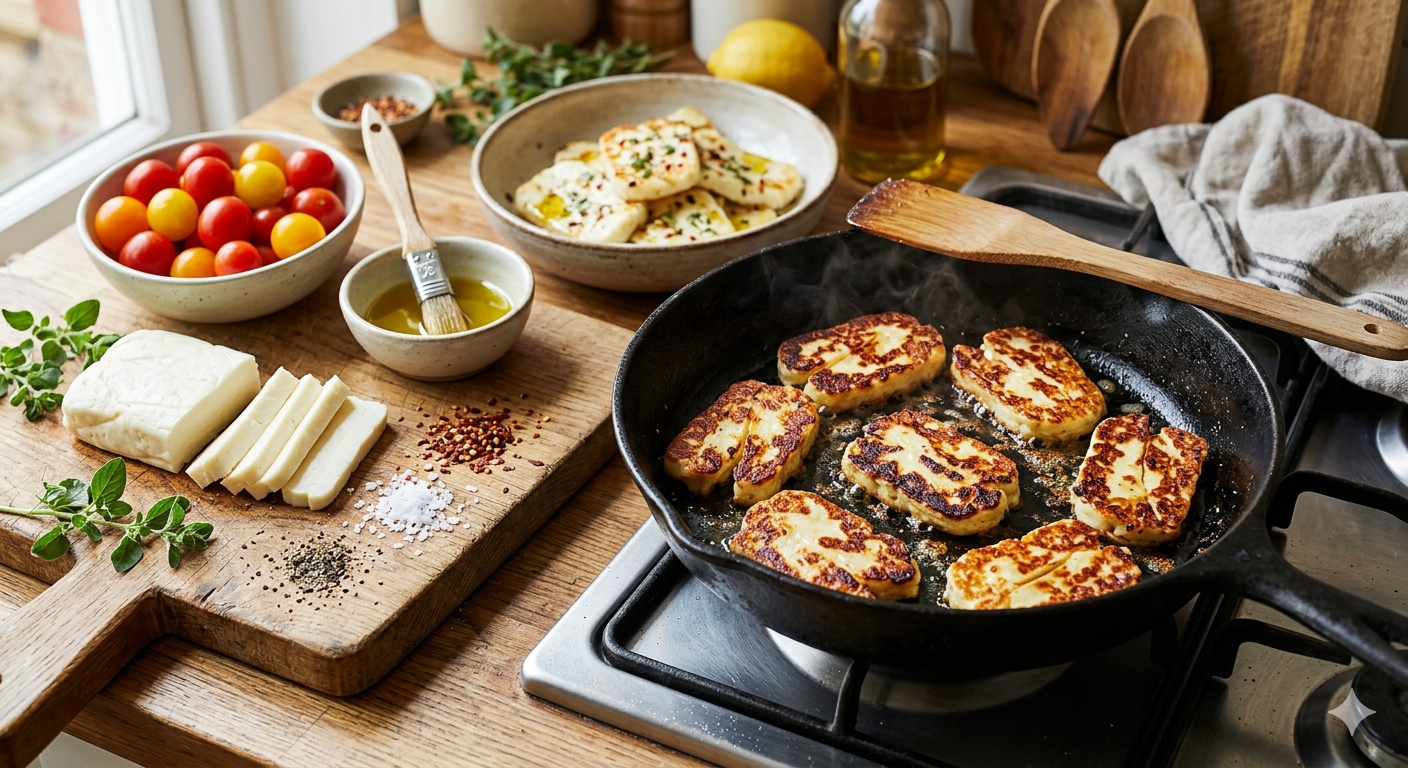
Dry it thoroughly. This is where most people stumble. Halloumi sits in brine, and that moisture is your enemy. Lay slices on paper towels and blot both sides. Skip this, and you will steam the cheese instead of searing it.
-
Slice with intention. Go for slices between 1 and 1.25 centimeters thick—roughly 0.4 to 0.5 inches. Thinner than that, and the interior dries out before the crust forms. Thicker, and you risk uneven cooking. Cut perpendicular to the short edge of the block so each slice holds together around the natural crack running through the center.
-
Heat the pan properly. Medium-high heat is your sweet spot. Add the oil and wait until it shimmers—do not let it smoke. A drop of water should sizzle and evaporate almost instantly.
-
Lay the slices down carefully. They will splutter. That is normal. Do not crowd the pan; give each slice breathing room. If they touch, they will steam each other instead of browning.
-
Let them be. Resist the urge to poke and prod. Cook for roughly 90 seconds to 2 minutes per side. You will know it is ready when the edges turn golden and the surface looks deeply caramelized. Flip gently—a spatula paired with a butter knife works best to keep slices intact.
-
Finish fast. Transfer to a warm plate immediately. Drizzle with lemon juice, sprinkle herbs, and serve while the center is still soft and yielding. Halloumi firms up as it cools, and that glorious squeak intensifies. Some people love the squeak; others prefer the gooey warmth. Your call.
Three Pan Fried Halloumi Recipes That Will Make You a Kitchen Legend
The Classic: Lemon and Oregano Pan Fried Halloumi
This is the purest expression of the cheese. Follow the method above, finish with a squeeze of lemon and a dusting of dried oregano. Serve with warm pita, kalamata olives, and a drizzle of good olive oil. It takes five minutes and tastes like a Mediterranean vacation.
The Sweet-Savory Twist: Honey and Thyme Pan Fried Halloumi
Once your slices hit the plate, drizzle with hot honey, scatter fresh thyme leaves, and add a pinch of red pepper flakes if you like heat. The saltiness of the cheese against the floral sweetness of honey is the kind of combination that stops conversation. Serve it as an appetizer when friends come over, and watch them fight over the last piece.
The Weeknight Warrior: Pan Fried Halloumi Breakfast Bowl
Fry your halloumi, then in the same pan, quickly warm some cherry tomatoes until they blister. Add to a bowl with a fried egg, sliced avocado, and a handful of arugula. A sprinkle of za’atar ties it all together. Twenty minutes, restaurant-quality breakfast, zero complaints from anyone at the table.
Common Pitfalls and How to Dodge Them
Even a forgiving cheese like halloumi has its limits. Here is what trips people up:
-
Slicing too thin. You end up with rubbery discs instead of creamy-centered perfection. Stick to that 1-centimeter minimum.
-
Skipping the dry-off. Wet cheese hits the pan and boils in its own brine. No crust, no glory.
-
Crowding the pan. Overlapping slices create steam pockets. Work in batches if you must.
-
Cooking on low heat. The cheese releases moisture before it browns, leaving you with pale, soggy slabs.
-
Adding salt. Halloumi is already brined. Extra salt pushes it into inedible territory.
Buying, Storing, and Getting the Most from Your Halloumi
When you are shopping, look for the PDO stamp—Protected Designation of Origin. That label guarantees authentic Cypriot halloumi made to traditional standards. Lower-quality imitations often crumble when cooked and lack that signature layered texture.
Unopened, halloumi keeps in the fridge for up to a year. Once you have cracked the package, store it submerged in fresh brine or salted water inside an airtight container. It will stay good for one to two weeks. Resist the temptation to freeze it—thawed halloumi turns crumbly and loses that beloved squeak.
Frequently Asked Questions About Pan Fried Halloumi
Why does not my pan fried halloumi get crispy?
Nine times out of ten, the cheese went into the pan damp. Pat it bone-dry with paper towels before it touches heat. Also check your pan temperature—too low, and the moisture wins.
Can I eat pan fried halloumi cold?
You can, but you probably will not want to. The magic lives in that hot, just-fried moment when the crust is crisp and the center is soft. Cold halloumi firms up and the texture shifts from inviting to chewy.
Is pan fried halloumi good for weight loss?
In moderation, yes. It is high in protein, which keeps you full, but it is also calorie-dense and salty. A small portion—think 40 to 50 grams—delivers satisfaction without blowing your daily targets. Pair it with vegetables rather than piling it on bread.
What oil works best for pan fried halloumi?
Light olive oil is the traditional choice and adds a subtle fruitiness. For higher heat, vegetable oil works fine. Skip extra-virgin olive oil for frying—it smokes at lower temperatures and can turn bitter.
Can I use halloumi as a meat substitute?
Absolutely. With roughly 22 to 25 grams of protein per 100 grams, it holds its own against many meat options. Vegetarians have been using it in burgers, kebabs, and wraps for years. Just double-check the rennet source if you are strict vegetarian—some brands use animal-derived rennet.
Your Next Move
You have got the knowledge. You have got the method. Now you need the cheese.
Head to your local grocery store or Mediterranean market, grab a block of authentic Cypriot halloumi, and give pan fried halloumi a shot this week. Start simple—just salt, pepper, and lemon. Once you nail the technique, start experimenting. Drizzle honey. Add chili. Throw it into a salad that actually excites you.
And when that first golden slice comes out of the pan, crispy at the edges and creamy in the middle, remember: you did not need a fancy recipe or hours of prep. You just needed the right cheese, a hot pan, and the confidence to try.
Drop a comment below and tell me—how did your first batch of pan fried halloumi turn out? Did you stick with the classics or go wild with toppings? I would love to hear what worked in your kitchen