
The Vitamin Your Body May Be Missing When Your Legs and Bones Hurt
Classic Greek Salad: The Timeless Dish That Brings the Mediterranean Straight to Your Plate
There is a reason this dish has stood the test of time. When you crave something crisp, vibrant, and unapologetically fresh, nothing satisfies quite like a classic Greek salad. It is not just food; it is a sun-drenched experience on a plate, a reminder that the best flavors often come from the simplest ingredients.
If you have ever wandered through a coastal village in Greece, you already know the magic. The tomatoes taste like sunshine. The cucumbers snap with coolness. The feta cheese crumbles with salty perfection. And that olive oil? Liquid gold drizzled over everything. You do not need a passport to enjoy this. You just need the right approach.
What Makes a Classic Greek Salad Truly Authentic
You have probably seen countless versions labeled “Greek salad” at restaurants and grocery stores. Many of them get it wrong. They add lettuce. They throw in bell peppers. They drown everything in a heavy dressing. A real classic Greek salad—known in Greece as horiatiki or village salad—follows a tradition that dates back generations.
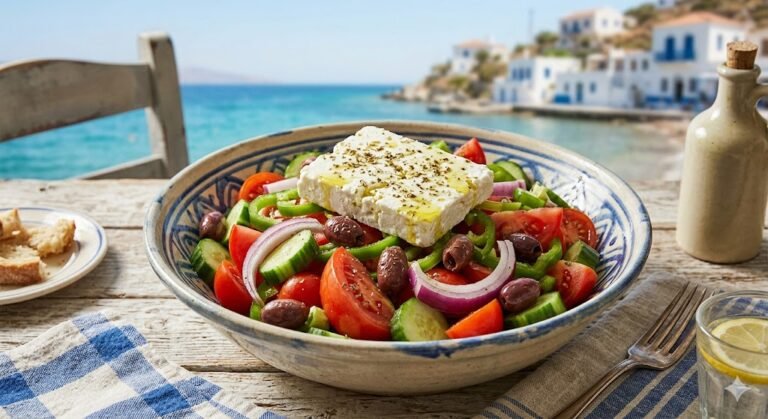
The authentic version contains no lettuce. None. Zero. The base is chunky, ripe tomatoes and crisp cucumbers. From there, you add thin rings of red onion, briny Kalamata olives, and a generous slab of feta cheese. The dressing? Nothing more than extra virgin olive oil, a splash of red wine vinegar, a pinch of dried oregano, and perhaps a squeeze of lemon if you are feeling adventurous.
That is it. No creamy dressings. No complicated steps. The beauty lies in restraint.
Why You Should Add This Dish to Your Weekly Rotation
Let us be honest. Your body craves nourishment, not just calories. A classic Greek salad delivers exactly that. Every bite packs a nutritional punch without weighing you down.
Here is what you are feeding yourself with every forkful:
-
Tomatoes – Loaded with lycopene, a powerful antioxidant that supports heart health and may protect your skin from sun damage.
-
Cucumbers – Hydrating and low in calories, they provide vitamin K and help keep your digestion smooth.
-
Red onions – These sharp little rings bring quercetin to the table, which fights inflammation and supports your immune system.
-
Kalamata olives – Rich in healthy monounsaturated fats and vitamin E, they satisfy your craving for something savory while nourishing your cells.
-
Feta cheese – A fermented dairy product that offers protein, calcium, and probiotics for gut health. Plus, its bold flavor means you need less of it to feel satisfied.
-
Extra virgin olive oil – The cornerstone of the Mediterranean diet, linked to reduced risk of heart disease, stroke, and cognitive decline.
When you eat this salad, you are not just filling your stomach. You are fueling your body with ingredients that have been scientifically validated for longevity and wellness.
How to Build Your Classic Greek Salad Like a Pro
You do not need culinary school to nail this. You need fresh produce and a willingness to keep things simple. Follow these steps, and your classic Greek salad will rival anything served in a taverna overlooking the Aegean Sea.
Step 1: Choose Your Tomatoes Wisely
Roma, beefsteak, or heirloom varieties work beautifully. Look for ones that feel heavy for their size and yield slightly to gentle pressure. Slice them into thick wedges or hearty chunks. Never dice them small; you want substantial bites that hold their juices.
Step 2: Prep Your Cucumbers
Peel them partially—leave some stripes of skin for color and texture. Cut them into thick half-moons or chunky batons. English cucumbers work well because they have fewer seeds and thinner skin, but any firm cucumber will do.
Step 3: Slice the Onion Thin
Red onion brings the bite. Slice it into paper-thin rings, then let them soak in cold water for ten minutes if the sharpness feels overwhelming. This mellows the flavor without killing the crunch.
Step 4: Add the Olives
Pitted Kalamata olives are non-negotiable. Their deep purple color and rich, wine-like flavor define the dish. Leave them whole or halved—your call.
Step 5: The Feta Moment
Here is where many people go wrong. Do not crumble your feta into tiny bits. Cut it into a thick rectangular slab and place it right on top of the vegetables. This is the traditional presentation, and it allows each person to break off chunks as they eat. The contrast between the creamy cheese and crisp vegetables is what makes every bite exciting.
Step 6: Dress It Right
Drizzle generously with your best extra virgin olive oil. Add a splash of red wine vinegar. Sprinkle dried oregano over everything—do not be shy. Finish with a pinch of sea salt and cracked black pepper. If you have fresh oregano, even better. Toss gently, or serve undressed and let everyone customize their own plate.
Common Mistakes You Want to Avoid
Even a simple dish has pitfalls. Watch out for these:
-
Using iceberg lettuce as a base – This is not an American garden salad. Lettuce waters down the flavors and contradicts tradition.
-
Overdressing – You want the vegetables to shine, not swim. Start light; you can always add more.
-
Skipping the vinegar – The acidity balances the richness of the olive oil and feta. Without it, the salad feels flat.
-
Using pre-crumbled feta – It dries out quickly and lacks the creamy texture of a fresh block. Buy the block and cut it yourself.
-
Settling for bland tomatoes – If your tomatoes are pale and mealy, your salad will suffer. Wait for peak season or splurge on vine-ripened varieties.
Pairing Your Classic Greek Salad with Other Dishes
This salad holds its own, but it also plays well with others. Here are some pairings that elevate your meal:
-
Grilled lamb chops or souvlaki – The cool, crisp salad cuts through the richness of charred meat perfectly.
-
Crusty sourdough bread – Use it to soak up every last drop of olive oil and tomato juices on your plate.
-
Tzatziki and hummus – Turn your salad into a full Mediterranean feast with these classic dips.
-
Grilled fish – Sea bass, branzino, or swordfish find their ideal companion in this refreshing side.
-
A glass of chilled Assyrtiko wine – If you drink, this crisp Greek white wine mirrors the salad’s brightness.
The Emotional Connection: Why This Salad Matters
Food is never just about nutrients. It is about memory, place, and feeling. When you prepare a classic Greek salad, you are participating in a ritual that connects you to generations of cooks who understood that quality ingredients need little interference.
Maybe you are making this for a weeknight dinner after a long day. Maybe you are serving it at a summer gathering while the grill smokes in the background. Or perhaps you are simply trying to eat better, one meal at a time. Whatever your reason, this salad meets you where you are. It does not judge. It does not complicate. It nourishes.
Your Next Step: Bring the Mediterranean Home Today
You now have everything you need to create an authentic, unforgettable classic Greek salad in your own kitchen. No fancy equipment. No hard-to-find ingredients. Just fresh produce, good olive oil, and the willingness to honor a tradition that has brought joy to countless tables.
Head to your local market this week. Pick up the ripest tomatoes you can find. Grab a block of real feta. Pour that olive oil with confidence. Build your salad, take a photo, and share it. Tag us in your creation—we want to see how you make this classic your own.
What is your favorite way to enjoy a classic Greek salad? Drop your twist in the comments below, and do not forget to subscribe for more recipes that honor real food, real flavor, and real tradition.